
.png)

Start the Week With a Shared Picture
Every match week starts with the same pressure: understand how you played in the last game on a team and player level, and start building a plan for your next opponent who you may have never analyzed before.
Until now, the insights in MyGamePlan operated at the metric level. Useful once you know where to look. Less useful when you're trying to form a first picture.
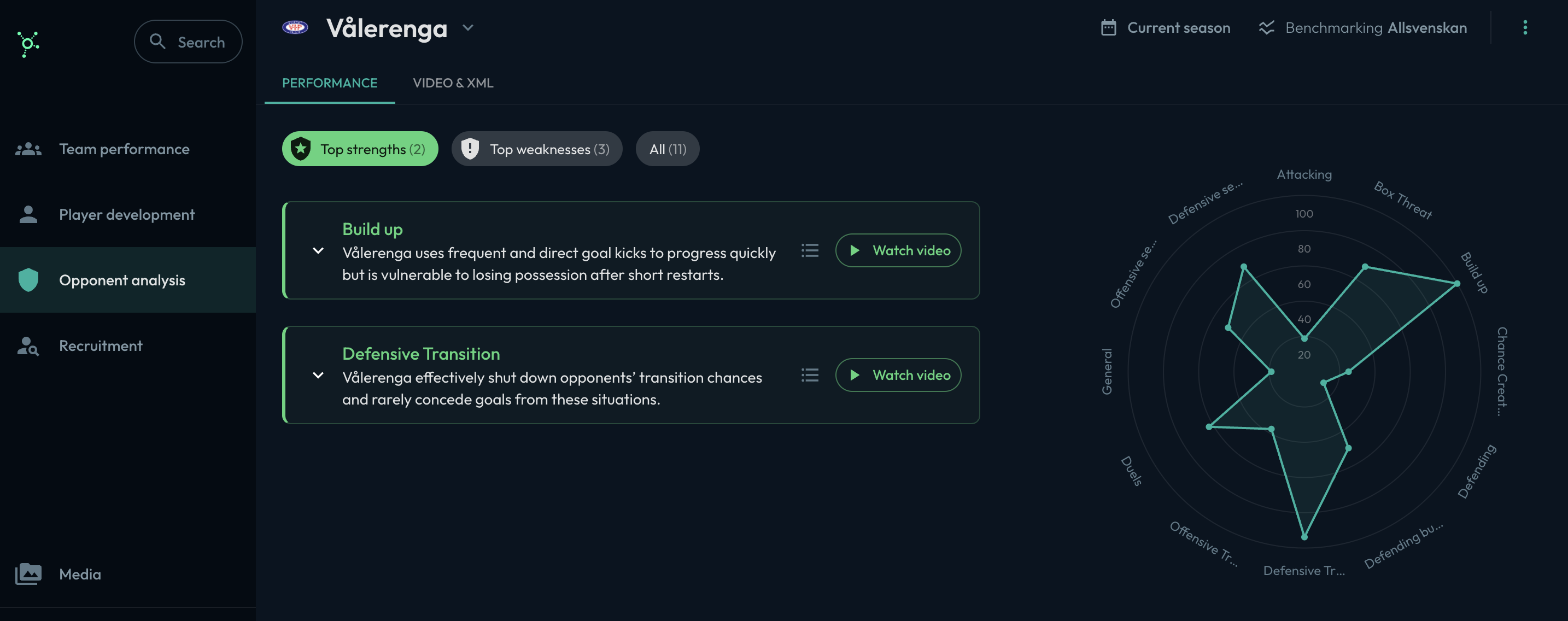
Our new Category Insights change that. In one view, your staff gets a tactical synthesis on a team, player or opponent level, organized around the phases and categories your club has already defined in your game model.
Category Insights reflect your setup, your language, your categories.
Everyone on the staff is looking at the same picture, in the same structure, from day one of the prep week.
What's new with Category Insights
A tactical profile of each category. A Category Insight reads across all the metrics within one of your categories, and synthesises them into a coherent picture of what the opponent does in that area: their tendencies, their identity, and their current trajectory.
Seasonal identity and recent form, combined. Each Category Insight draws on two signals: how the team compares to the league across that category over the season, and how they have been trending in their last five matches. You get both what they consistently do and what they have been doing lately.
Surfacing what matters for your game plan. Category Insights apply tactical logic to what gets highlighted. The opponent's attacking strengths are flagged because your team needs to be prepared for them. Their defensive vulnerabilities are flagged because your team can target them. The system selects the most strategically relevant signals automatically, so the output is focused and actionable from the start.
From Insight to Action
Category Insights are the entry point to your weekly workflow. Each insight links directly to the specific trackers and video behind it, so your deep dives are already focused before they begin. You're not working out where to look. You already know.
Example: Build-Up Play: Dinamo Zagreb
Dominant Sequence: Strong preference for short passes from the own box followed by a direct long ball into the final third.
High Volume: This pattern has increased in recent matches, suggesting a growing tactical emphasis on quick vertical progression.
Effective Progression: A structured approach to bypassing the midfield and reaching advanced positions efficiently.
From this, an analyst knows exactly where to start. A coach has a first idea before reviewing a clip.
Want to see this in action? Get started below.
Want this set up for your team? Book a call.
.jpg)