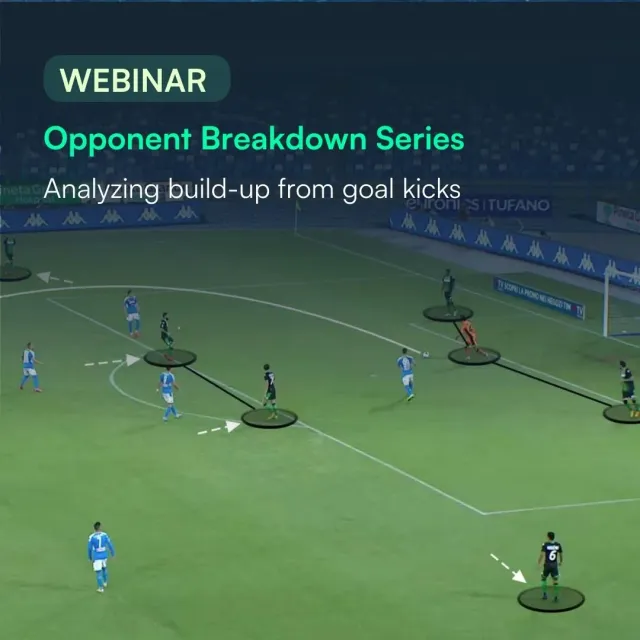
Webinar·
Opponent Breakdown Series: Analyzing build-up to the final third

MyGamePlan
Football Analytics Platform
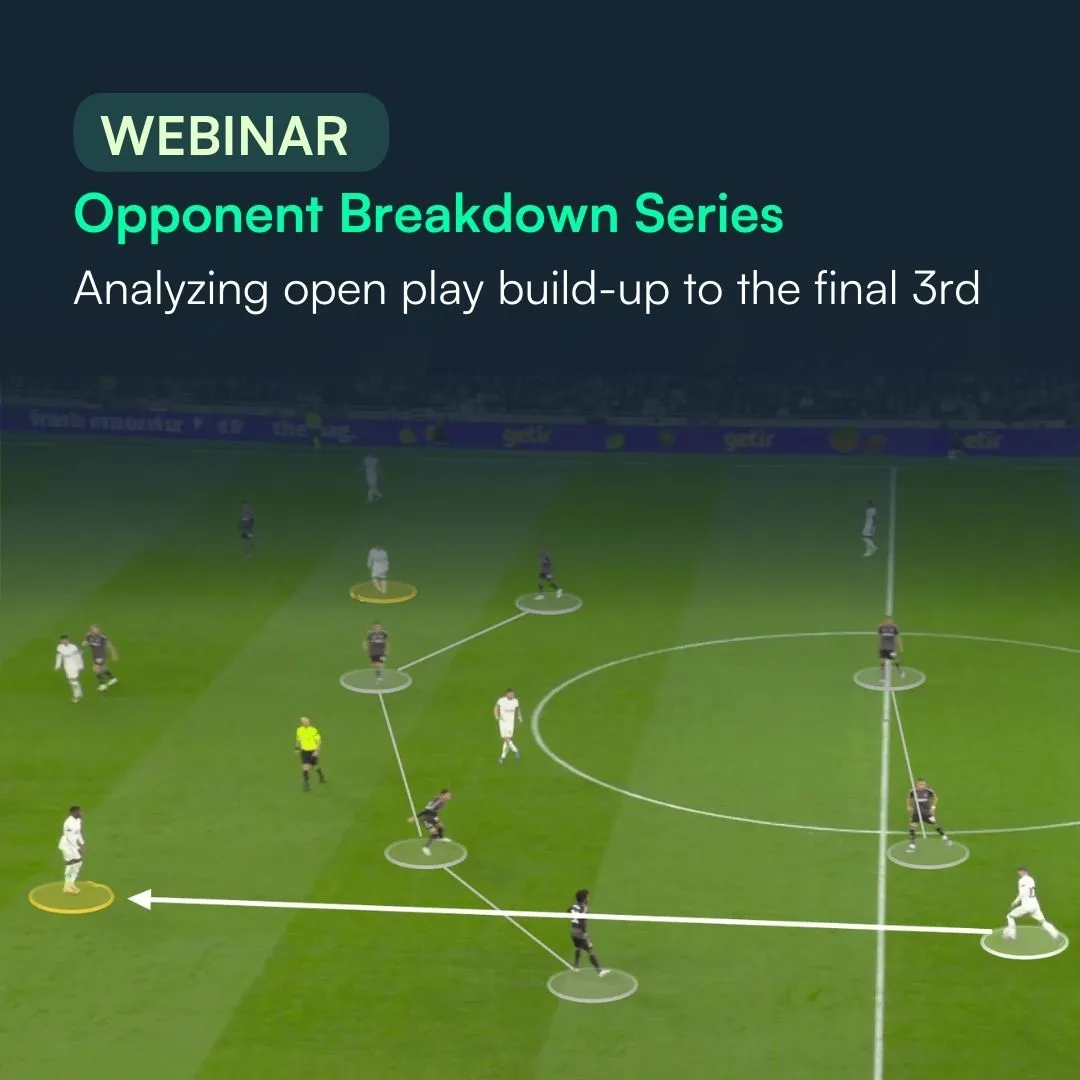
⚽ Teams often use the same routes and principles to reach the final third – but are you taking advantage of that?
In Part 2 of our Opponent Breakdown Series, we dive into open-play build-up into the final third and look at how to use that information in your game planning.
What we covered
We’ll walk through three practical workflows:
🔹 Basic: simple routes to quickly see where they’re getting out.
🔹 Advanced: tracking which routes actually lead to shots, not just entries.
🔹 Expert: full build-up chains from how they break lines, reach the final third and create shots against high, mid and low blocks.
We’ll use real game examples and share practical tips you can take straight into your next opponent week.
Scaling the workflow with MyGamePlan
We also showed how the same process can be scaled with MyGamePlan to:
- build your build-up tagging structure once
- auto tag 20+ games of your opponent to those same metrics
- export XMLs straight into your video tools (Sportscode, Metrica, MyVA, etc.)
So instead of preparing from a small 2–3 game sample, you can base your pressing plan on a much broader picture of the opponent – without multiplying your tagging time.
Who it’s for
Performance and video analysts
Assistant and head coaches
Anyone involved in opposition analysis and pressing strategy
Want to break this down for your own matches? Book a call.
Run this on your own matches.
Ask MGPT about your team or your next opponent. Free to try with your professional email.