
The Challenge
Getting to the detail, faster
Opponent analysis lives or dies on preparation time, and most of that time gets spent before the real analysis even begins. Building a tagging panel by hand, then tagging match after match against it, is slow, repetitive work. The more of the week it consumes, the fewer matches an analyst can realistically cover, and the longer it takes to reach the patterns a coach actually needs.
At KRC Genk, video analyst Tuur Ickmans wanted the balance tipped the other way: less time spent producing the base layer of tags, more time spent reading what they reveal.
Watch the Story
Hear from the analyst
Key Outcomes
What changed with MyGamePlan
01
More matches, faster patterns
All tags arrive already generated, with the main phases in place. Instead of tagging a few matches by hand, Tuur can work across ten, and get to the patterns sooner.
02
Greater depth across the analysis
When a question comes up, he sets a tracker and gets it answered across a full set of matches at once, rather than hunting for clips one game at a time.
03
Preparation that starts earlier
Analysis reaches the coach further ahead of the fixture, so training can be built around it instead of assembled at the last moment.
The Solution
Automating your base layer
Tuur's approach used to start with his code window: build it, then tag every match against it manually. MyGamePlan removed that first step. He downloads the XML for a match, and the tagging is generated automatically, synced onto the video and structured to the phases he works with.
Because the main phases are delivered up front, he can go straight into detail where something stands out, ask MyGamePlan when a coach flags a specific point, and spend his time showing players the moments that matter rather than preparing the ground to find them.
THE DETAIL
Every phase, already sorted
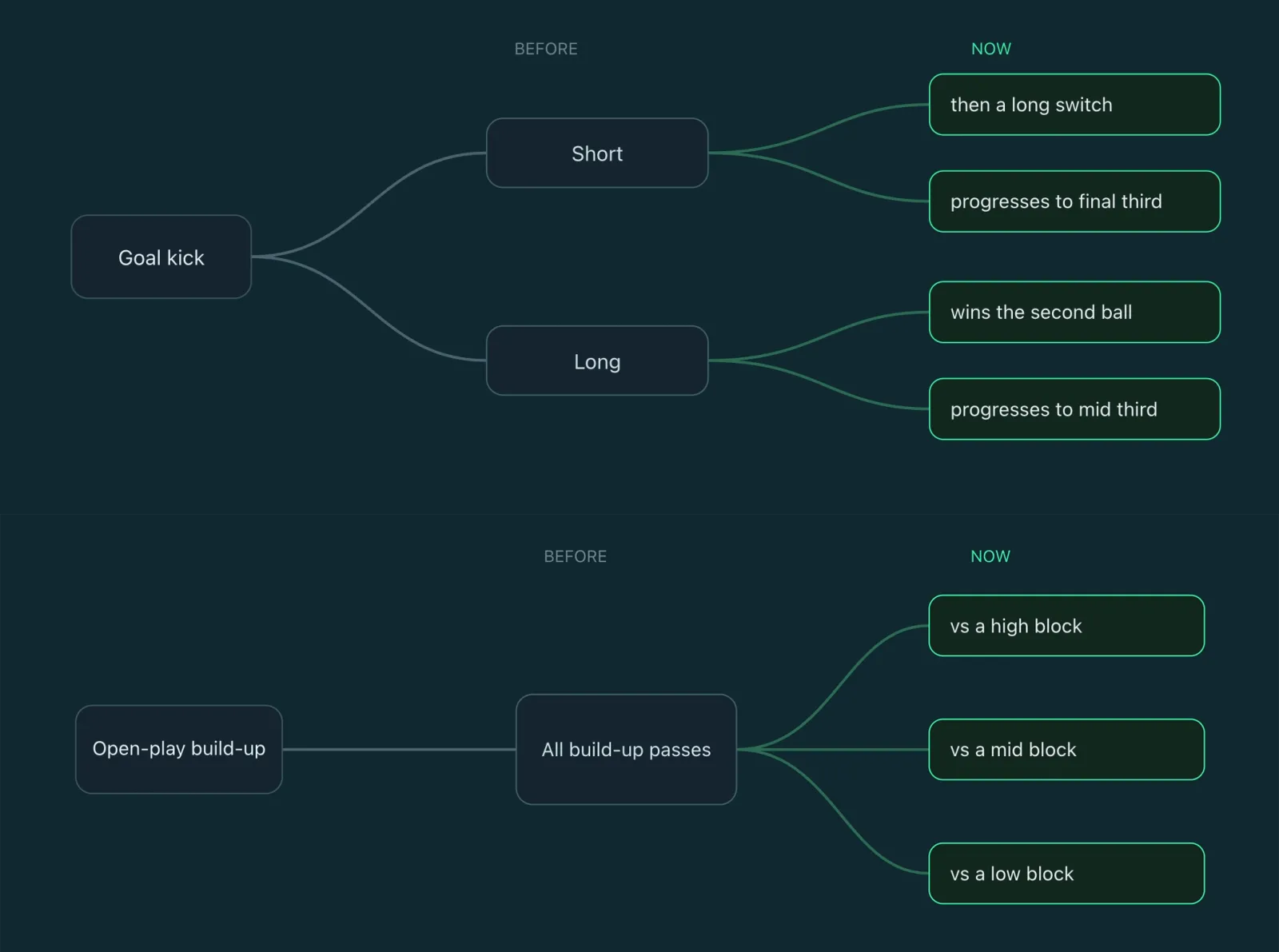
The clearest example is the goal kick. It used to mean tagging every goal kick by hand before any analysis could start. Now all goal kicks arrive pre-sorted into the phases that Tuur wants: short to long, direct long into the final third, broken down by zone, so he can go straight to the specific situation and read the pattern across it at a glance.
The same holds for build-up: rather than sorting everything by hand to find where a pattern occurs, he sees it in one overview and combines the patterns from there. It is the difference between preparing to look and actually looking.
FROM THE ACADEMY TO THE FIRST TEAM
One system across the club
Genk's development runs on a shared idea of how their players should play, and the trackers are built to match it, set individually by position. The same trackers that run on the first team run on the Jong Genk squad.
That consistency is what makes progression measurable: the club can see, from the same data, whether a young player is meeting the markers that show he is ready to step up.